10 Essential Tools Every Professional Tattoo Artist Needs

0

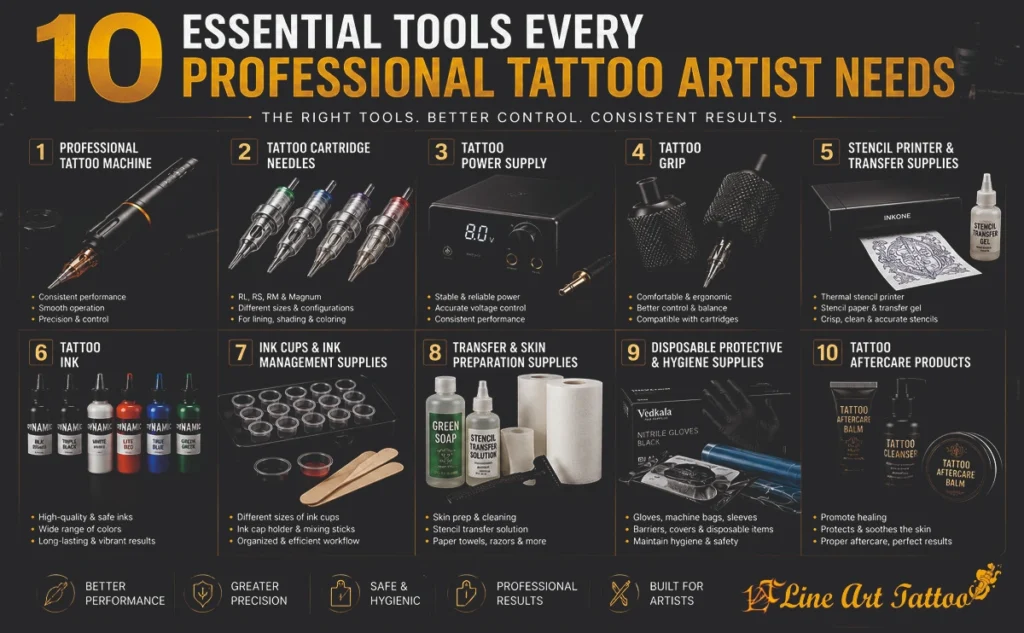
10 Essential Tools Every Professional Tattoo Artist Needs

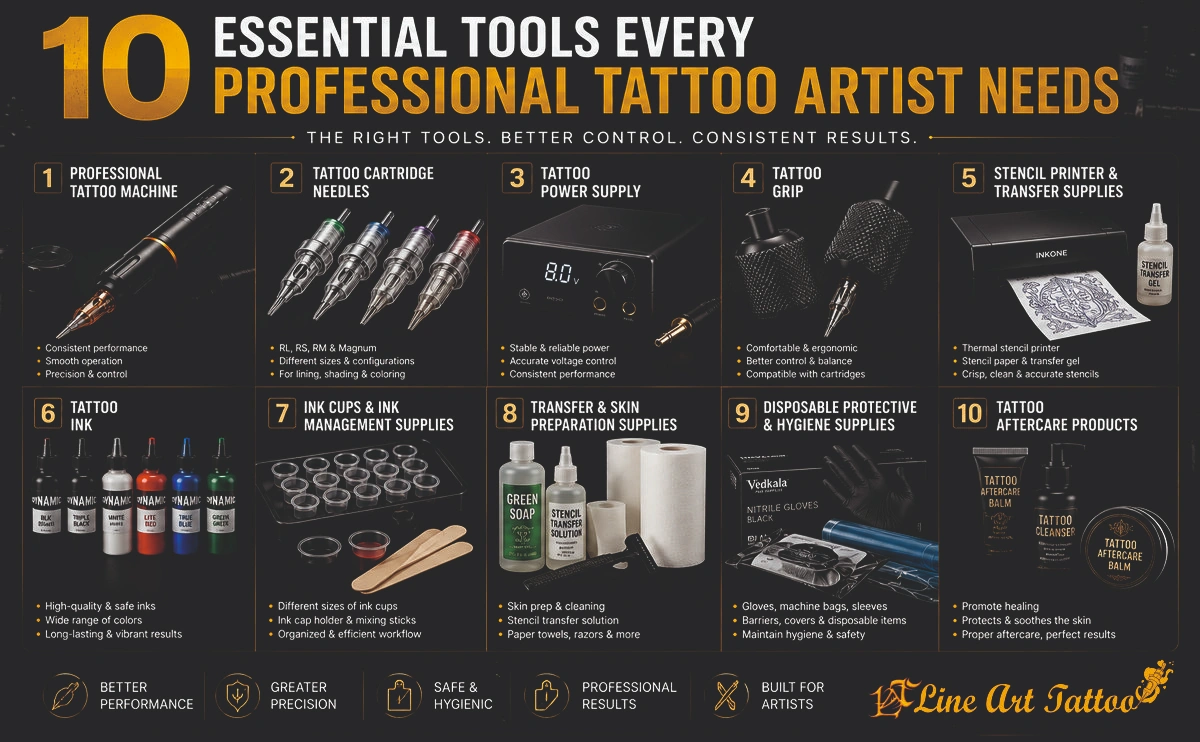
A great tattoo is not created by the tattoo machine alone. Professional tattoo artists rely on a complete set of equipment and supplies to achieve precision, consistency, comfort and safe working practices.

Whether you are setting up your first professional tattoo workstation or upgrading your existing equipment, having the right tools can make your workflow much smoother.

Here are 10 essential tools every professional tattoo artist should have.

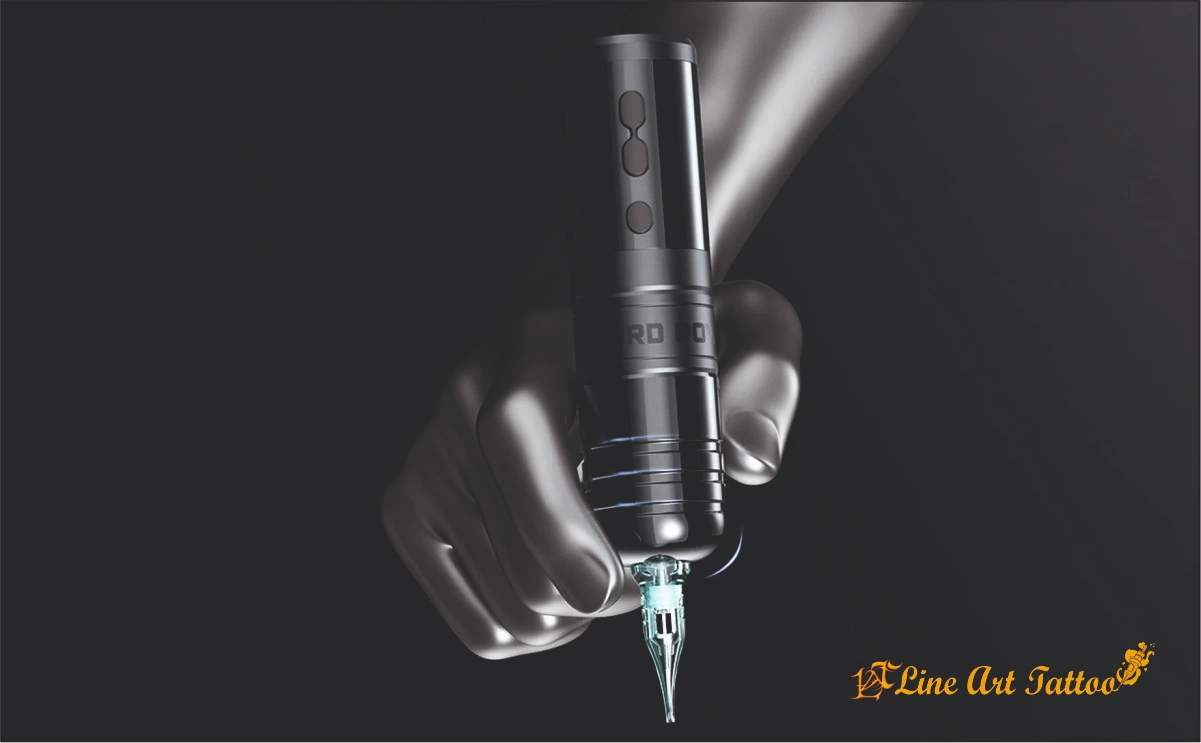
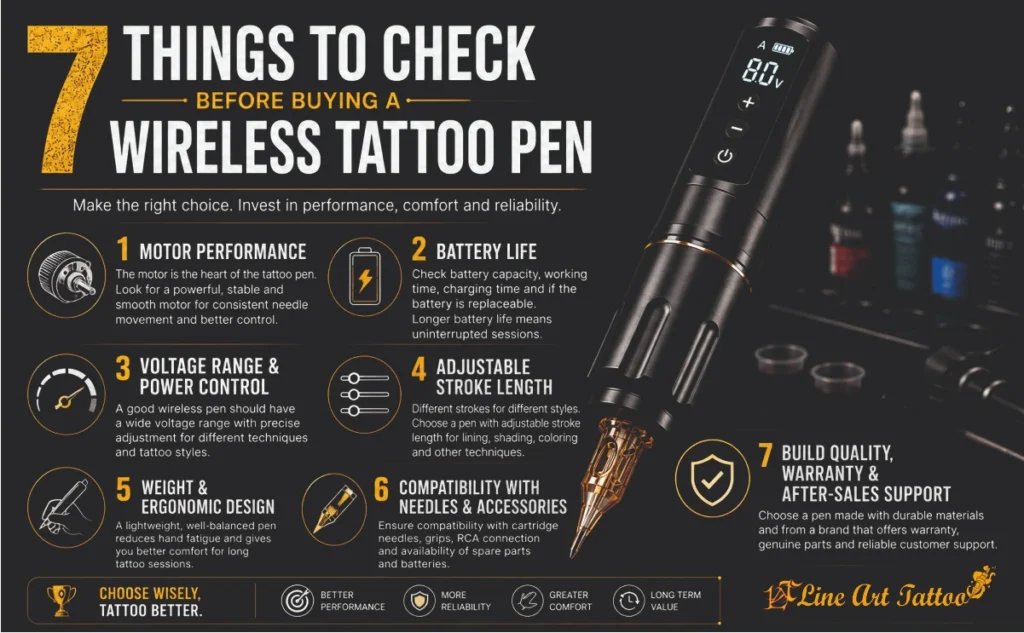
1. Professional Tattoo Machine

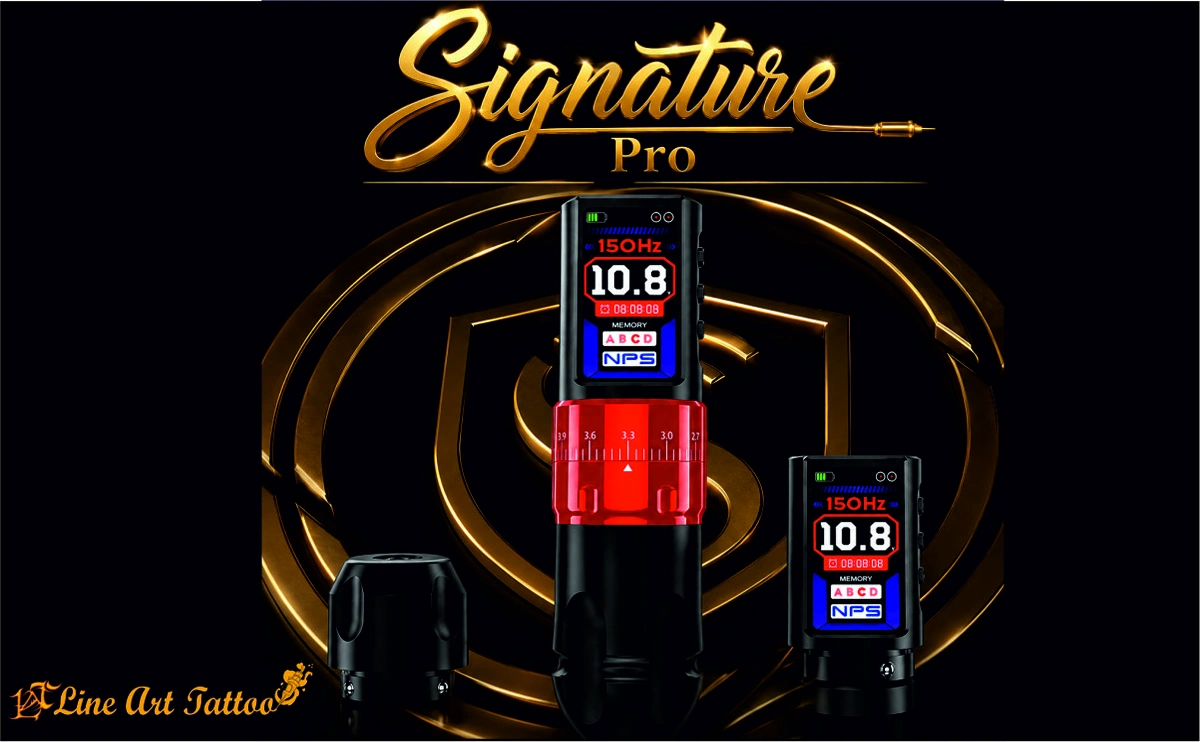
The tattoo machine is the most important piece of equipment in an artist's setup.

Today, artists can choose between rotary machines, coil machines and wireless tattoo pen machines.

A good machine should provide:

  • Consistent needle movement
  • Reliable motor performance
  • Comfortable handling
  • Stable power delivery
  • Good control and precision

Wireless tattoo pen machines are particularly popular because they eliminate the power cable during tattooing and provide greater freedom of movement.

When choosing a machine, consider its motor, weight, grip, stroke length, voltage control and compatibility with your preferred cartridge needles.

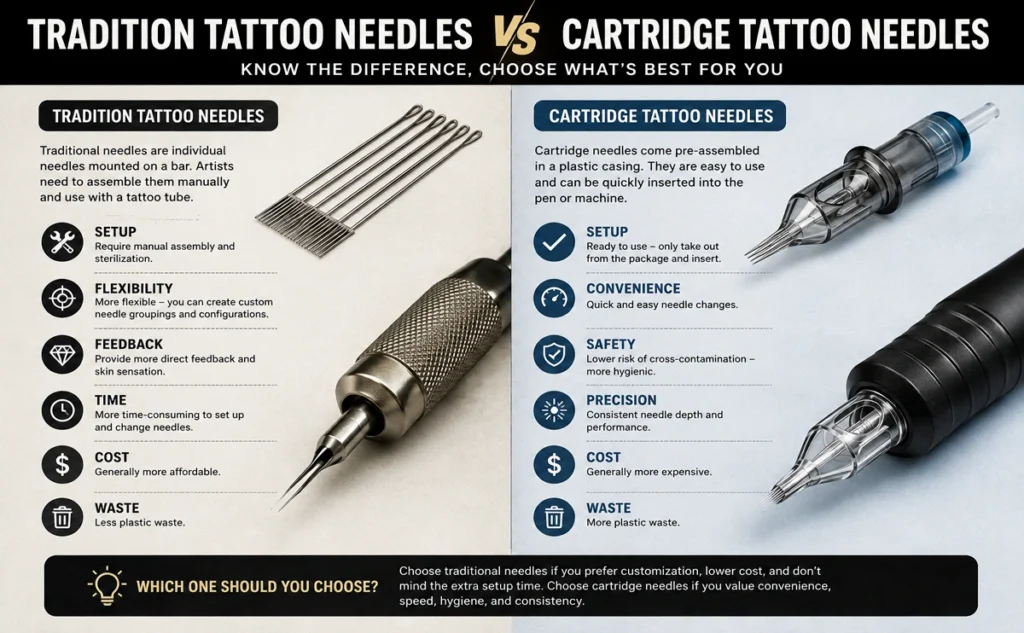
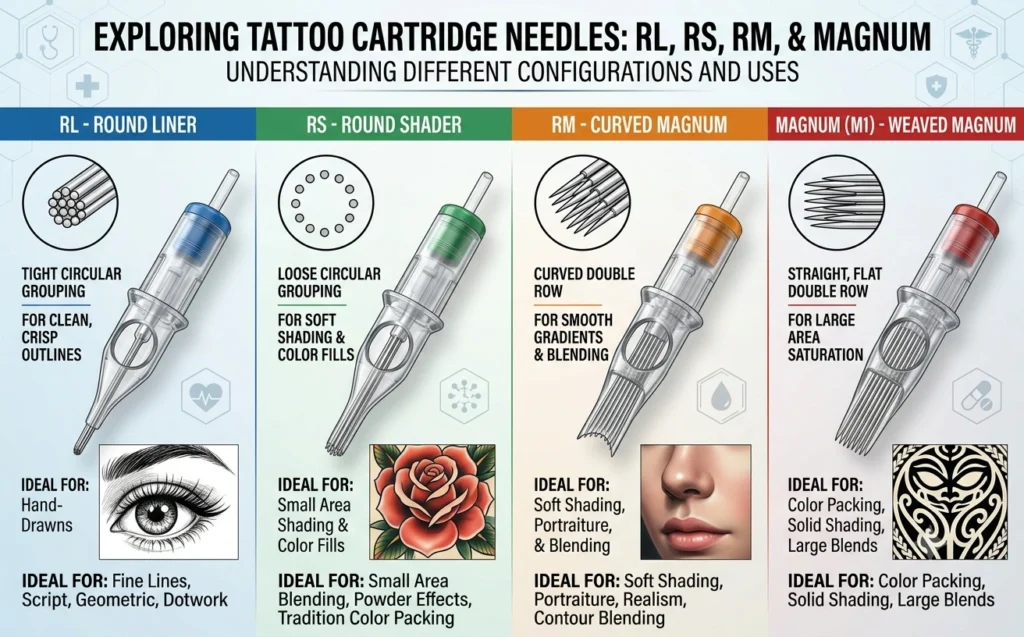
2. Tattoo Cartridge Needles

The right needle configuration is essential for achieving the desired tattoo result.

Professional artists typically keep multiple configurations available for different techniques.

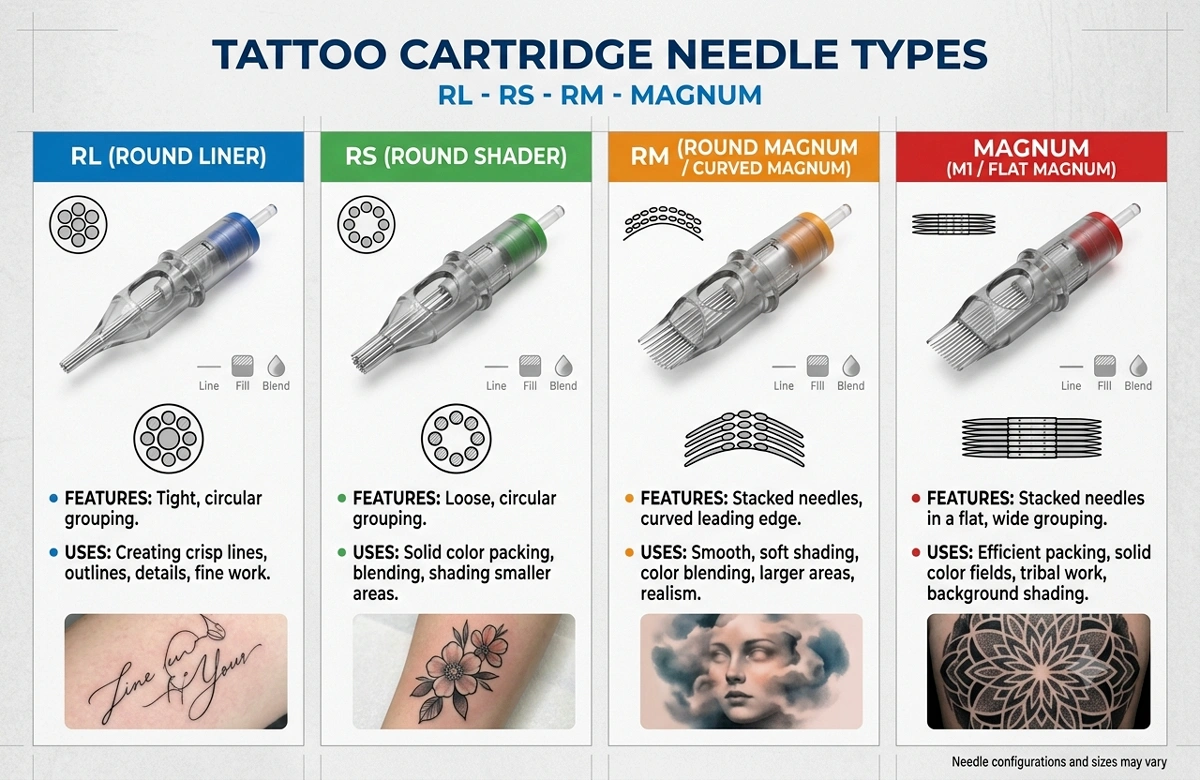
Common configurations include:

RL – Round Liner

Used primarily for lines, outlines and fine details.

RS – Round Shader

Useful for small-area shading, blending and filling.

RM – Round Magnum

Commonly used for smooth shading, grey wash and transitions.

Magnum

Suitable for larger areas of shading and color packing.

Artists should also consider needle diameter, taper and grouping when selecting cartridges.

3. Tattoo Power Supply

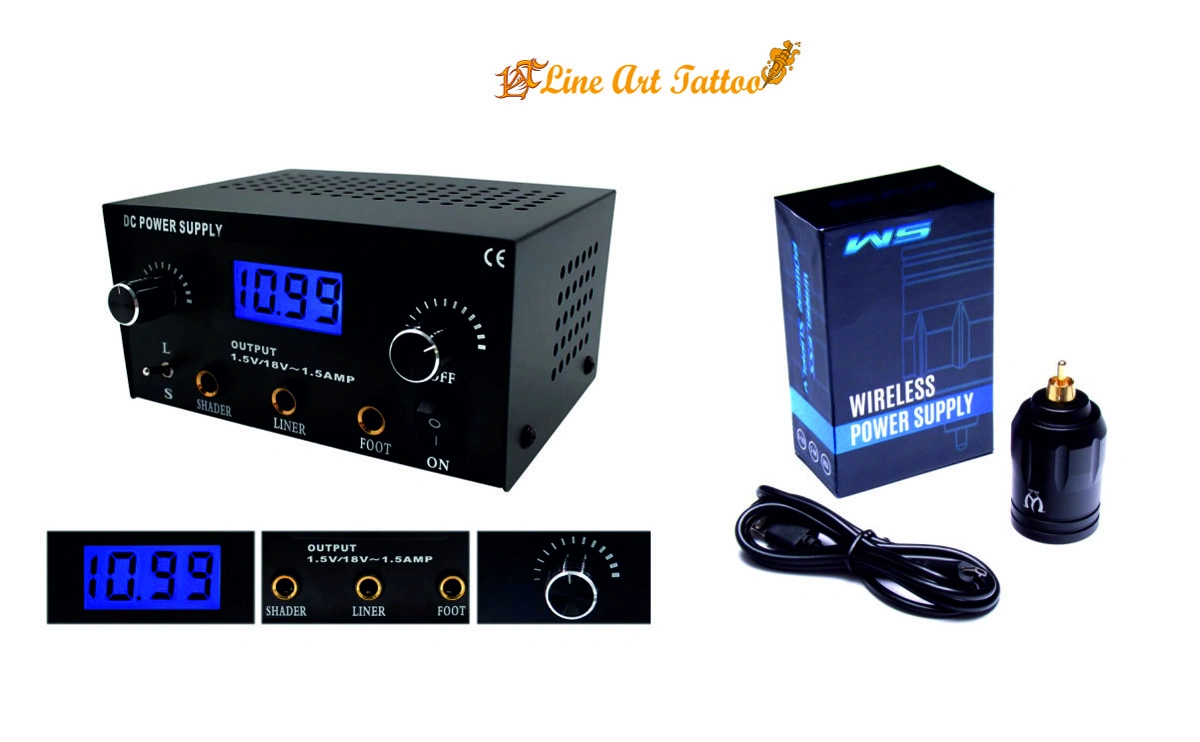
For wired tattoo machines, a reliable power supply is essential.

A professional power supply should provide stable and adjustable power so the artist can fine-tune the machine according to their technique and needle configuration.

Important features can include:

  • Accurate voltage adjustment
  • Clear digital display
  • Stable output
  • Easy controls
  • Reliable construction

Wireless Power Supply you can used for wired tattoo pen, coil machines and Rotary tattoo machine. Very use full and budget friendly for all types of Artist

For artists using wireless machines, the machine's integrated battery and control system effectively take over many of these functions.

4. Tattoo Grip

The grip connects the artist's hand to the machine and plays an important role in comfort and control.

A good grip should feel secure without causing unnecessary hand fatigue during long sessions.

Consider:

  • Grip diameter
  • Weight
  • Ergonomic shape
  • Adjustability
  • Cartridge compatibility

Different artists prefer different grip sizes, so choosing a comfortable grip is largely a matter of personal preference and working technique.

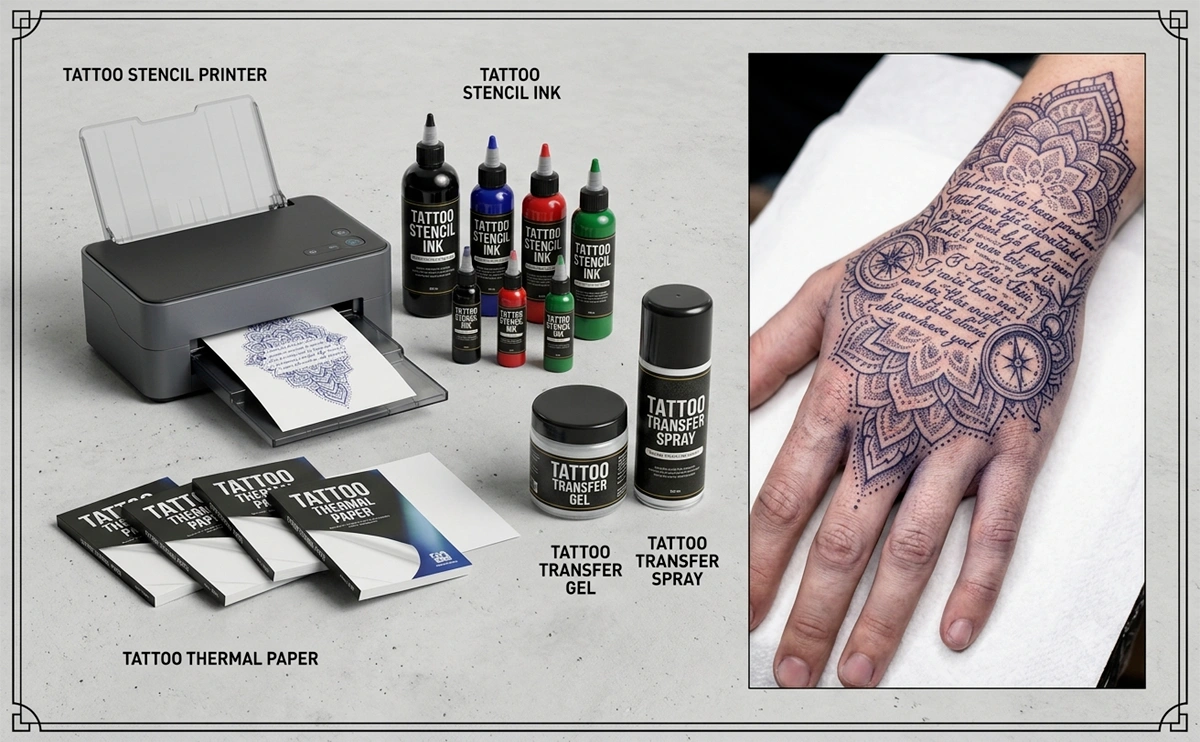
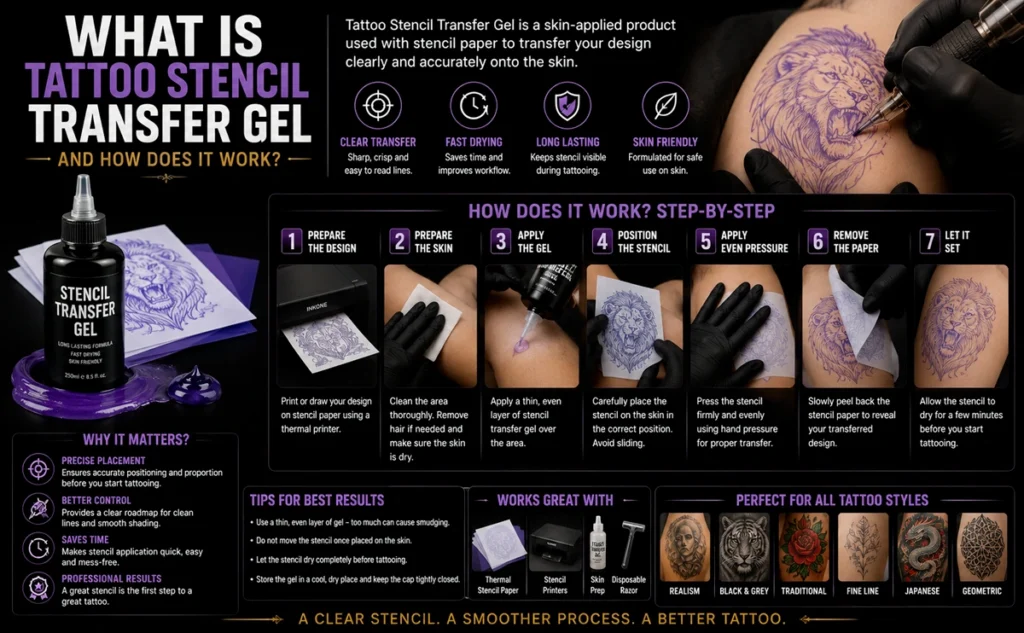
5. Stencil Printer and Transfer Supplies

A precise stencil provides the artist with a guide to follow while tattooing.

Modern tattoo artists often use a thermal stencil printer to quickly transfer designs onto stencil paper.

A professional stencil setup may include:

  • Thermal stencil printer
  • Tattoo stencil paper
  • Stencil transfer gel or solution
  • Design software or digital artwork
  • Stencil application supplies

A clean and accurately positioned stencil can make the tattooing process much more organized.

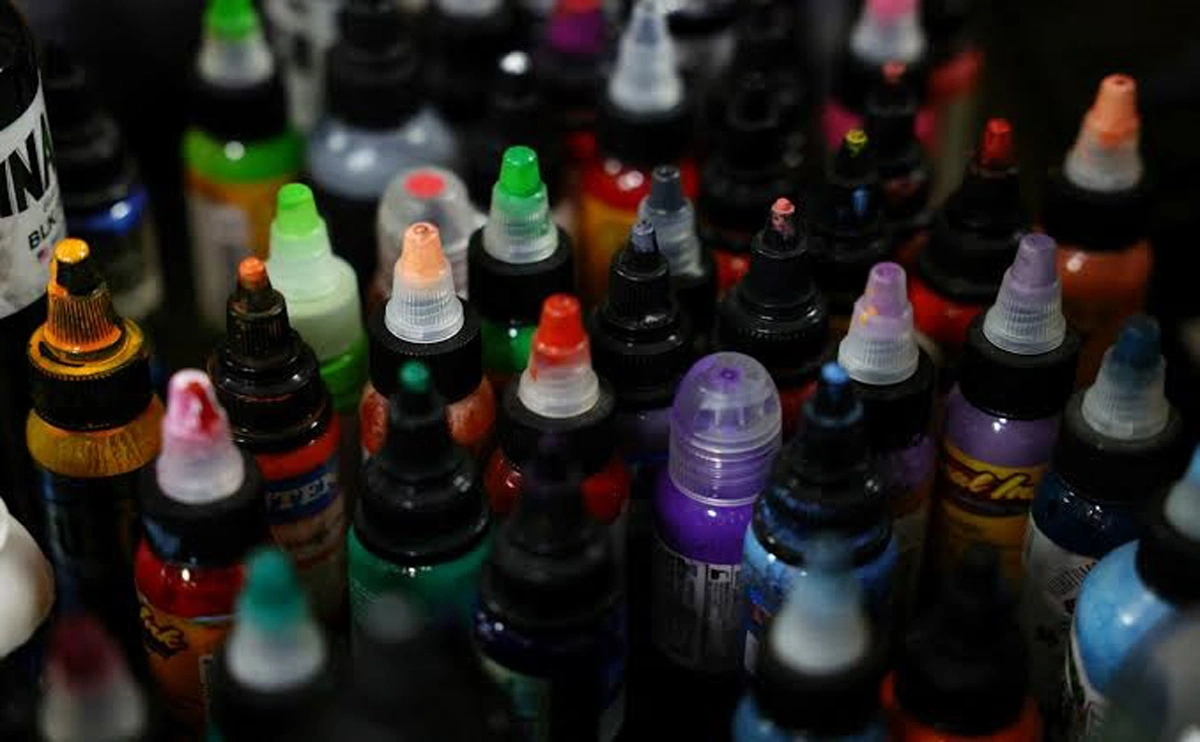
6. Tattoo Ink

High-quality tattoo ink is another essential part of a professional setup.

Artists may need different colors depending on their tattoo style and client requirements.

A basic professional ink collection can include:

  • Black
  • White
  • Grey shades
  • Primary colors
  • Secondary colors
  • Specialized shades

Artists should purchase tattoo inks from reputable manufacturers and follow the manufacturer's instructions for storage, handling and use.

Always verify that products are appropriate for professional tattooing and comply with applicable local requirements.

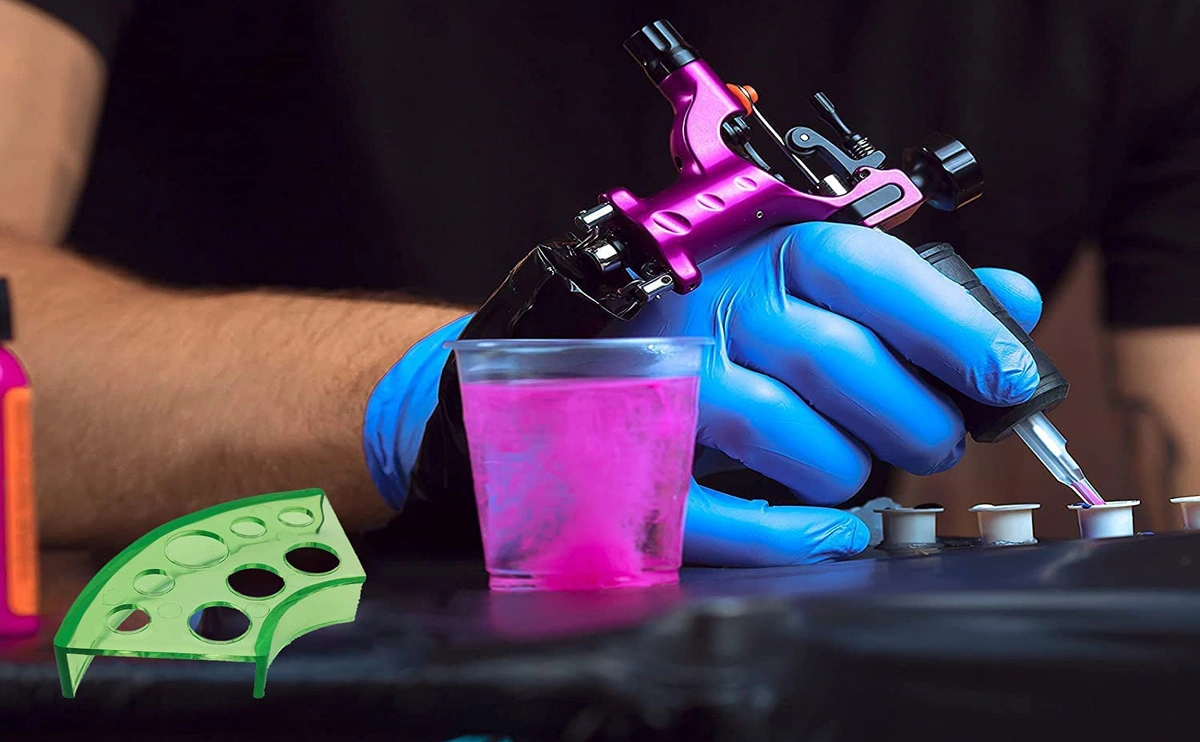
7. Ink Cups and Ink Management Supplies

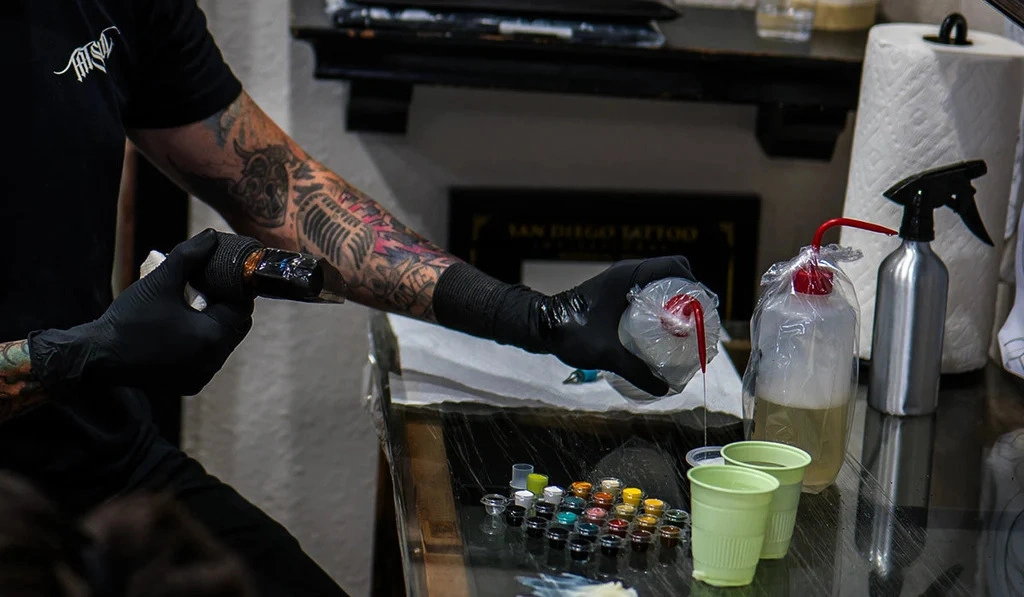
Ink cups may seem like a small part of the workstation, but they are essential during almost every tattoo session.

They provide a convenient way to organize the required amount of ink during the procedure.

Different sizes can be useful for different applications.

Artists may also use:

  • Ink cup holders
  • Mixing sticks
  • Ink caps
  • Disposable mixing supplies

Keeping inks organized helps create a cleaner and more efficient workstation.

8. Tattoo Transfer and Preparation Supplies

Before tattooing begins, the artist needs to properly prepare the working area and apply the stencil.

Common supplies include:

  • Stencil transfer solution
  • Skin preparation products
  • Disposable razors where appropriate
  • Paper towels
  • Disposable barriers
  • Skin-safe markers

Proper preparation helps the artist work efficiently while maintaining appropriate hygiene practices.

9. Disposable Protective & Hygiene Supplies

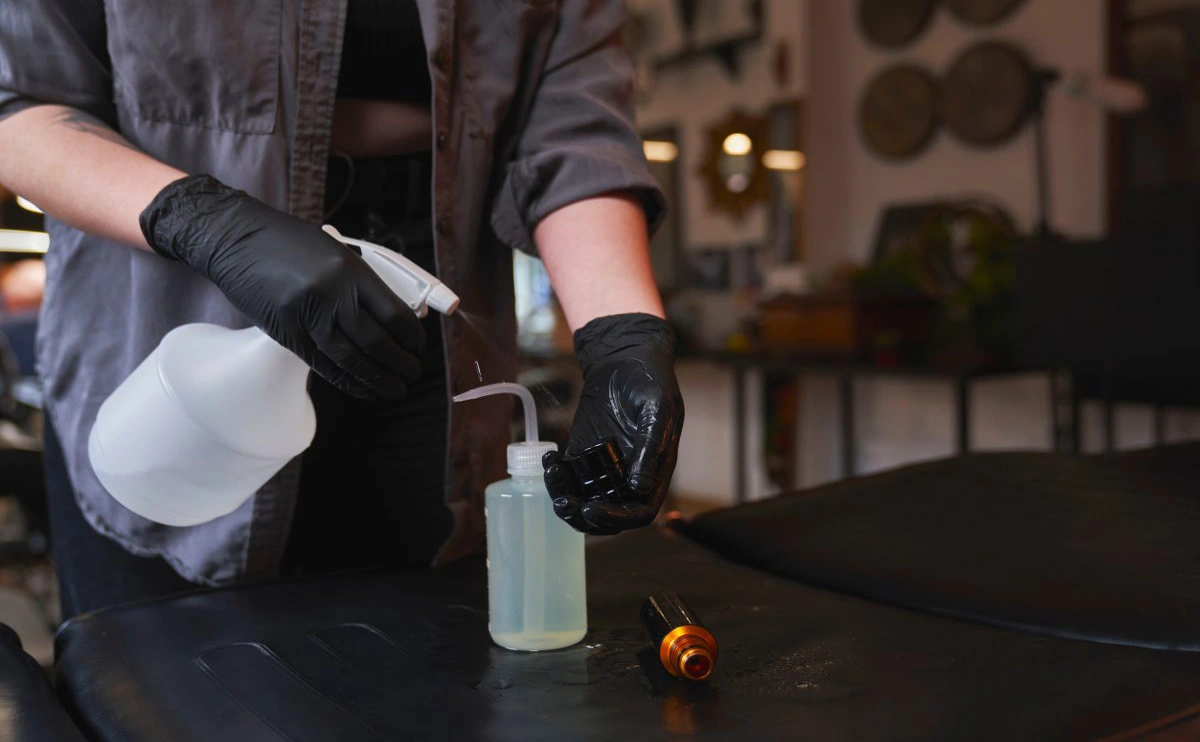
Professional tattooing requires much more than a machine and needles. Hygiene and cross-contamination prevention should be a fundamental part of the workstation.

Depending on local regulations and professional protocols, artists may use:

  • Disposable gloves
  • Machine bags
  • Clip-cord sleeves
  • Surface barriers
  • Disposable trays
  • Disposable razors
  • Sharps containers
  • Approved cleaning and disinfection products

Single-use items should be disposed of appropriately after use, and reusable equipment should be cleaned and sterilized according to applicable professional standards and manufacturer instructions.

Never reuse single-use tattoo needles or cartridges.

10. Tattoo Aftercare Products

The artist's job does not necessarily end when the tattoo is finished.

Clients also need proper information and suitable aftercare products to help them care for their new tattoo.

Depending on the product and local requirements, tattoo aftercare may include:

  • Tattoo cleansing products
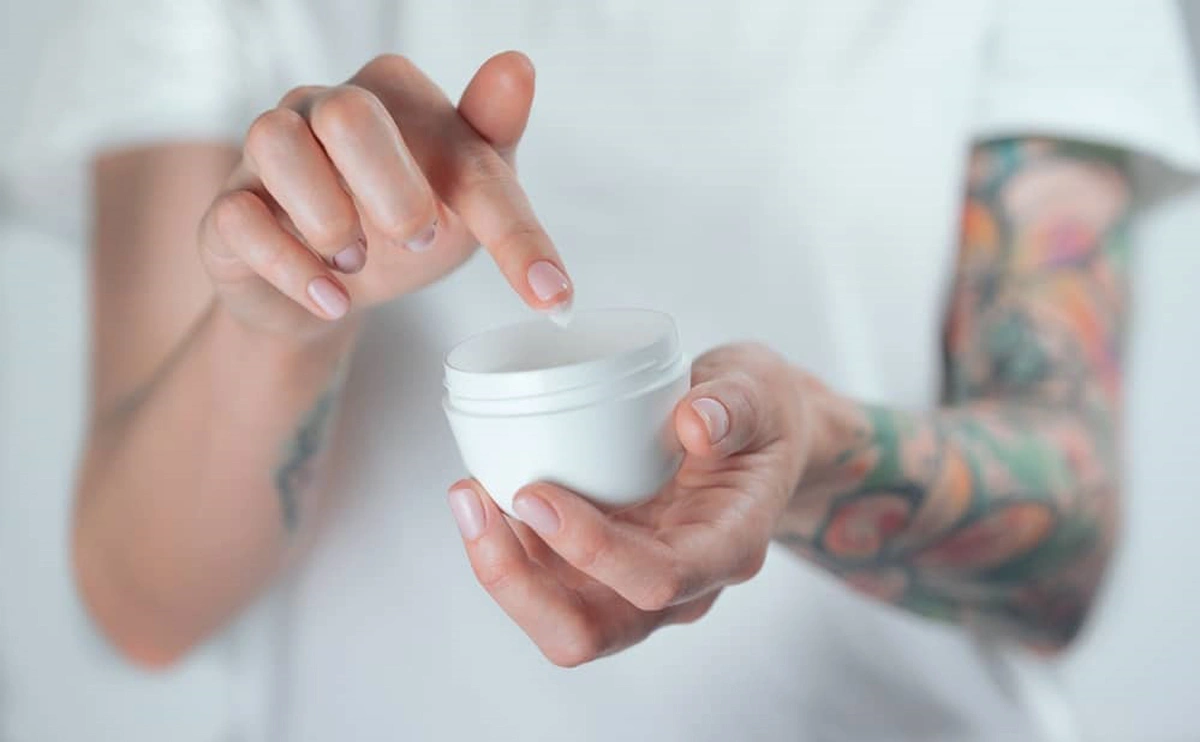
  • Tattoo aftercare balm
  • Moisturizing products
  • Protective products
  • Printed aftercare instructions

Artists should provide clients with clear aftercare instructions and explain how to care for their tattoo during the healing process.

Bonus: Other Useful Tattoo Studio Equipment

Beyond these 10 essentials, a professional studio may also require:

  • Tattoo workstation
  • Adjustable artist chair
  • Client tattoo chair or bed
  • Tattoo lighting
  • Magnifying or vision glasses
  • Wireless battery chargers
  • Extra batteries
  • Machine stands
  • Disposable bibs and drapes
  • Storage containers
  • Waste disposal equipment

The exact equipment list will depend on the artist's tattoo style, studio setup and local regulations.

How to Build Your Professional Tattoo Setup

If you're a beginner, you don't necessarily need to purchase every available tattoo product at once.

Start with the essential equipment and gradually expand your setup as your skills and requirements grow.

A practical setup should focus on four areas:

1. Machine & Needles
Choose equipment that gives you reliable control and suits your tattooing style.

2. Ink & Stencil
Use quality products that help you achieve consistent results.

3. Hygiene & Safety
Maintain a professional workstation and follow applicable hygiene, sterilization and disposal requirements.

4. Comfort & Organization
Arrange your workstation so your tools are easily accessible and your working position remains comfortable during longer sessions.


Final Thoughts

Professional tattooing requires the right combination of skill, equipment, technique and hygiene.

The tattoo machine may be the centerpiece of your setup, but cartridge needles, grips, ink, stencil equipment, power systems, disposable supplies and aftercare products all contribute to a professional workflow.

Invest in reliable equipment, understand how each tool works, and choose products that match your tattooing technique.

A well-organized workstation doesn't just make tattooing easier—it helps you work with greater control, consistency and professionalism.

Frequently Asked Questions

What is the most important tool for a tattoo artist?

The tattoo machine is one of the most important tools, but professional tattooing requires a complete setup that includes needles, ink, hygiene supplies, stencil equipment and other accessories.

What tattoo machine is best for beginners?

A machine that is comfortable, reliable, easy to control and compatible with commonly available cartridge needles can be a good starting point. Many beginners prefer pen-style rotary machines because of their familiar shape and straightforward operation.

How many tattoo needle configurations should an artist have?

There is no fixed number. Artists generally build a selection based on the styles and techniques they use, such as lining, shading, blending and color packing.

Are cartridge needles reusable?

No. Tattoo cartridges designed for single use should not be reused. Dispose of used cartridges appropriately in accordance with local sharps-disposal requirements.

Why is tattoo hygiene important?

Tattooing involves breaking the skin, so appropriate infection-control procedures are essential. Artists should follow applicable regulations, use appropriate single-use supplies and properly clean, disinfect and sterilize equipment as required.

Do professional tattoo artists need a wireless tattoo machine?

Not necessarily. Wireless machines are an option that can provide greater freedom of movement, while many professional artists continue to use wired machines. The best choice depends on the artist's preference, technique and workflow.

Leave a Reply

Your email address will not be published. Required fields are marked *